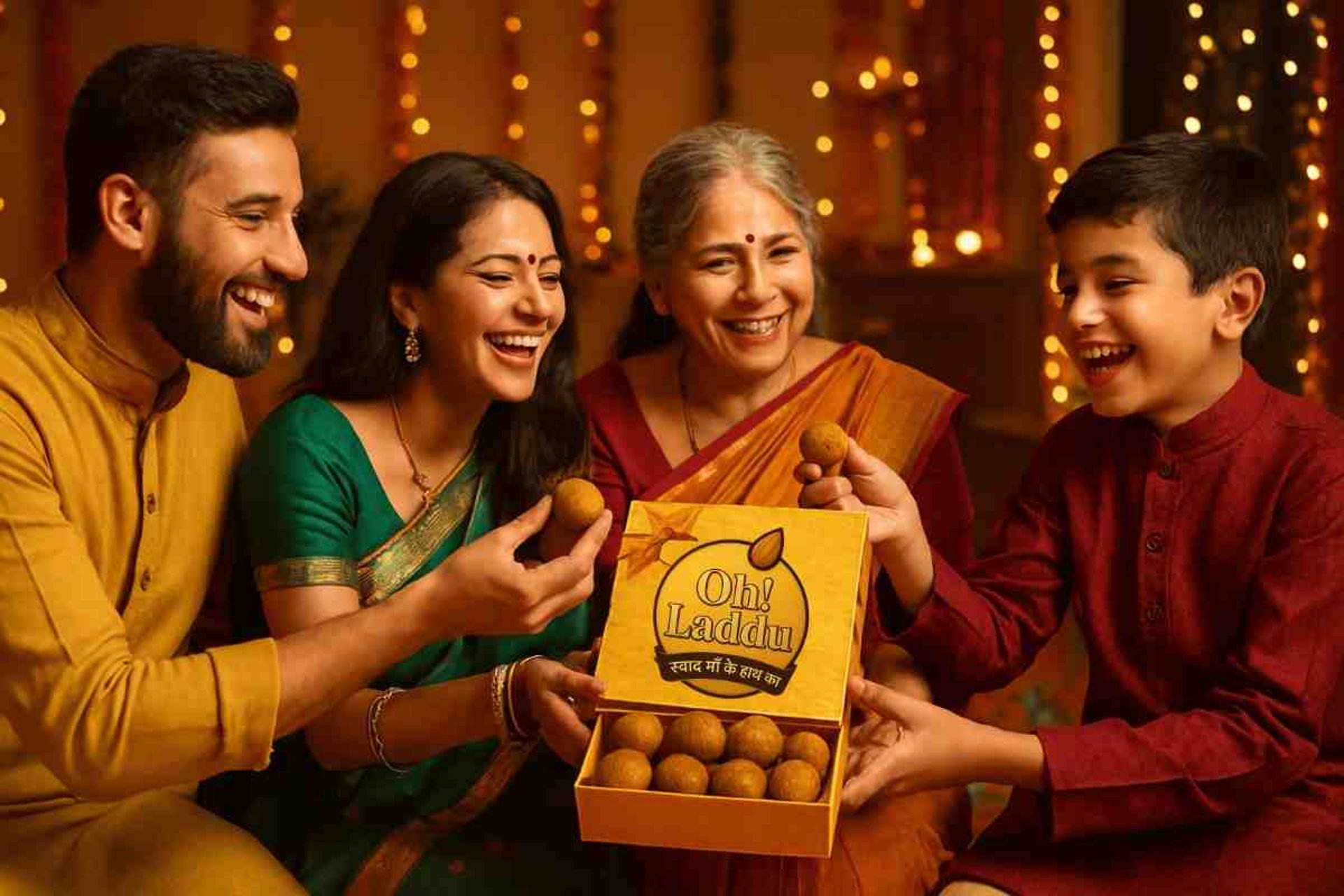
Homemade Laddu vs Store-Bought Sweets - What's Really Inside?
Discover the shocking truth about packaged sweets vs homemade laddus. Learn about harmful preservatives, hydrogenated oils, and artificial ingredients in commercial products. Complete ingredient comparison, quality identification tips, and why preservative-free laddu with natural ingredients is the healthier choice for your family. Oh! Laddu offers homemade quality with modern convenience.
Homemade Laddu vs Store-Bought Sweets - What's Really Inside?
Have you ever flipped over a packaged sweet box to read the ingredients list? If you haven't, you might want to after reading this. That innocent-looking box of laddus sitting on the supermarket shelf might contain a lot more than just besan, ghee, and sugar. Let's pull back the curtain and see what really goes into homemade vs packaged sweets because when it comes to your family's health, you deserve to know the truth.
The Uncomfortable Truth About Packaged Sweets
Walk into any modern grocery store, and you'll find rows of colorful boxes promising "authentic taste" and "traditional recipes." The packaging looks appealing, the price seems reasonable, and the convenience is undeniable. But here's what most manufacturers don't advertise prominently:
The Average Shelf Life Problem: Most packaged sweets boast a shelf life of 3-6 months. Now, ask yourself traditional homemade laddus last about 2-3 weeks at room temperature. How does a commercial product last 10 times longer? The answer lies in what's added to make that possible.
The Hidden Cost of Convenience: That affordable price tag often comes at the expense of ingredient quality. Premium ingredients like pure desi ghee, real nuts, and natural sweeteners are expensive. To keep costs down and profits up, many manufacturers resort to cheaper alternatives that might save money but compromise nutrition and health.
Harmful Ingredients Lurking in Commercial Products
Let's talk about what actually goes into many store-bought sweets. While not all brands are guilty of all these practices, these ingredients are alarmingly common:
1. Hydrogenated Vegetable Oils and Palm Oil
Instead of pure ghee, many manufacturers use hydrogenated vegetable oils or palm oil. These contain trans fats that increase bad cholesterol (LDL), decrease good cholesterol (HDL), and are linked to heart disease, diabetes, and inflammation. The label might say "vegetable ghee" or "vanaspati" both are code words for hydrogenated fats.
2. Refined White Sugar
While homemade laddus traditionally use jaggery or minimal sugar, commercial products often contain excessive refined white sugar. This provides empty calories with zero nutritional value, causes blood sugar spikes, contributes to obesity, and feeds harmful bacteria in your gut.
3. Preservatives and Stabilizers
To achieve that long shelf life, manufacturers add chemical preservatives like:
Potassium Sorbate (E202): Linked to allergic reactions and skin irritation
Sodium Benzoate (E211): Can cause hyperactivity in children
Calcium Propionate (E282): Associated with digestive issues
BHA and BHT: Antioxidant preservatives with potential health concerns
4. Artificial Colors and Flavors
That perfect golden color? Often achieved with synthetic food colors like Tartrazine (E102) or Sunset Yellow (E110), both linked to hyperactivity and allergic reactions. The "rich taste" might come from artificial flavoring compounds rather than real cardamom or saffron.
5. Cheap Fillers and Adulterants
To reduce costs, some manufacturers use:
Low-quality flour instead of pure besan
Synthetic sweeteners mixed with sugar
Minimal or zero actual nuts (just artificial nut flavor)
Glucose syrup instead of natural sweeteners
6. Excessive Sodium
Many packaged sweets contain surprisingly high sodium levels as a preservative and taste enhancer something you'd never find in homemade versions.
The Beautiful Simplicity of Homemade Laddus
Now let's look at what goes into authentic homemade laddus the ones your grandmother made:
Pure Ingredients, Nothing Hidden:
Fresh besan, whole wheat flour, or other whole grain flours
Pure desi ghee from cow's milk
Natural sweeteners like jaggery or minimal sugar
Real nuts: almonds, cashews, pistachios
Authentic spices: cardamom, saffron, nutmeg
Edible gum (gond), sesame seeds, or other traditional ingredients
Love and time no shortcuts
That's it. No 15-syllable chemical names you can't pronounce. No ingredients you need a chemistry degree to understand. Just real food that nourishes your body.
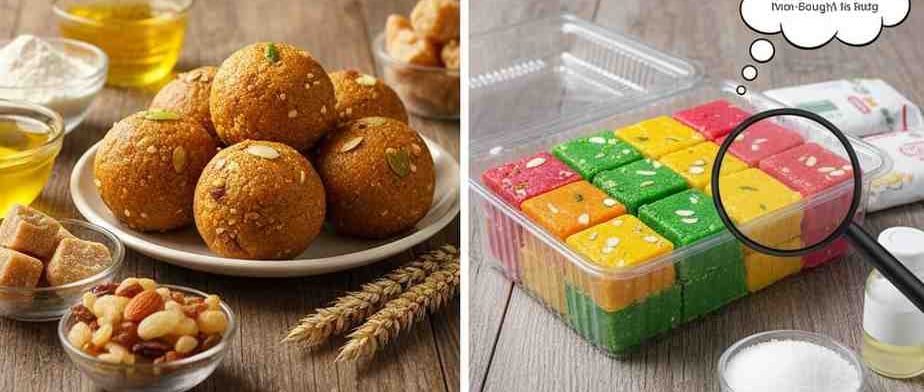
Ingredient Comparison: Seeing is Believing
Traditional Homemade Laddu:
Fat Source: Pure desi ghee (100% cow's milk)
Sweetener: Jaggery or minimal sugar
Flour: Freshly roasted besan or whole wheat
Nuts: Real almonds, cashews, pistachios
Preservatives: None (natural shelf life 2-3 weeks)
Colors: Natural golden from roasting
Flavors: Real cardamom, saffron, rose water
Additives: Zero
Nutritional Value: High in vitamins, minerals, healthy fats
Calories: 80-120 per laddu (nutrient-dense)
Typical Store-Bought Sweet:
Fat Source: Hydrogenated vegetable oil, palm oil, or vanaspati
Sweetener: Refined white sugar, glucose syrup
Flour: Lower grade flour with possible adulterants
Nuts: Minimal or artificial nut flavor
Preservatives: Potassium sorbate, sodium benzoate, calcium propionate
Colors: Tartrazine, Sunset Yellow, or other synthetic dyes
Flavors: Artificial flavoring compounds
Additives: Emulsifiers, stabilizers, anti-caking agents
Nutritional Value: Empty calories, trans fats, minimal nutrients
Calories: 90-150 per piece (mostly from sugar and trans fats)
The difference is stark, isn't it?
How to Identify Quality Laddu Products
If you're buying laddus from the market, here's how to spot quality products:
1. Read the Ingredient List: If it contains more than 8-10 ingredients, be cautious. If you see words like "hydrogenated," "E-numbers," "artificial," or "vanaspati," walk away.
2. Check the Fat Source: Look for "pure desi ghee" or "cow ghee." Avoid "vegetable ghee," "vanaspati," or just "edible oils."
3. Shelf Life Reality Check: If it claims to last 6+ months without refrigeration, question how that's possible without heavy preservatives.
4. The Smell Test: Quality laddus made with real ghee have a distinct, rich aroma. Chemical or rancid smells indicate poor ingredients or old stock.
5. Texture and Appearance: Homemade-style laddus have a natural, slightly irregular appearance. Too-perfect, uniformly colored products might be mass-manufactured.
6. Price Point: Quality ingredients cost money. If the price seems too good to be true, it probably is.
7. Transparency: Reputable brands proudly display their ingredient sourcing and preparation methods.
Oh! Laddu: The Best of Both Worlds
Here's the dilemma modern families face: We want the nutrition and purity of homemade laddus, but we don't always have 3-4 hours to spend roasting besan and shaping laddus. We want preservative-free laddu but need reasonable shelf life for our busy schedules.
This is exactly why Oh! Laddu exists.
We bridge the gap between homemade quality and modern convenience:
✅ 100% Natural Ingredients: Only pure desi bilona ghee, natural jaggery, fresh flour, real nuts, and authentic spices. No compromises.
✅ Zero Preservatives: Our laddus are preservative-free laddu products that stay fresh naturally due to the high-quality ghee content and proper storage methods.
✅ Traditional Preparation: Hand-roasted, hand-shaped, following recipes passed down through generations. We don't cut corners with machines or mass production.
✅ Complete Transparency: Every ingredient is clearly listed. We have nothing to hide because we use nothing questionable.
✅ Freshness Guaranteed: We make small batches regularly, so you always get fresh laddus. We prioritize freshness over long shelf life.
✅ No Hydrogenated Oils: We use only pure ghee the traditional way, the healthy way.
✅ Authentic Taste: The taste you remember from your grandmother's kitchen, because we make them exactly the way she would.
Think of Oh! Laddu as your trusted family member who makes laddus for you with the same care and quality you'd use yourself if only you had the time.
Making Informed Choices for Your Family
The goal here isn't to shame anyone for buying convenient sweets occasionally. Life is busy, and we all make trade-offs. The goal is awareness knowing what you're putting into your body and your children's bodies.
When you understand the difference between homemade vs packaged sweets, you can make informed choices:
For daily consumption: Choose homemade or brands like Oh! Laddu that prioritize natural ingredients
For festivals and special occasions: Go all out with traditional homemade preparations
When you're in a rush: Choose preservative-free laddu from trusted sources rather than mass-market products
For gifts: Give healthy sweets India that show you actually care about the recipient's health
The Real Value of Real Food
Yes, authentic laddus made with pure ingredients might cost more than mass-produced alternatives. But consider what you're really paying for:
Nutrition that actually nourishes rather than just fills
Health that prevents future medical costs
Quality ingredients that your body recognizes and uses efficiently
Peace of mind knowing exactly what your family is eating
Taste that brings back genuine memories and creates new ones
In the long run, investing in quality nutrition is always cheaper than dealing with lifestyle diseases caused by poor dietary choices.
Your Sweet Tooth Deserves Better
You don't have to choose between convenience and health. You don't have to sacrifice taste for nutrition. You just need to choose wisely.
The next time you reach for that box of packaged sweets, take a moment to read the label. And then, visit Oh! Laddu where every ingredient is something you'd use in your own kitchen, where every laddu is made with the care you'd give it yourself.
Because your family deserves sweets that are actually sweet for their health, not just to their taste buds.
Have questions about our ingredients or preparation methods? We're happy to share everything because transparency is our promise to you.